
Starting affiliate marketing can feel complicated when you are looking at websites, email tools, product links, traffic sources, and sales pages all at once. An Easy Commission Funnel gives beginners a more organized way to connect these pieces. Instead of sending every visitor directly to an offer, you can guide people through a simple path that introduces the opportunity, captures interest, and makes the next step clear.
This approach does not guarantee commissions or passive income. Results vary based on factors such as your audience, traffic, communication skills, consistency, offer quality, and overall strategy. However, a well-planned funnel can help you avoid common beginner mistakes and create a repeatable foundation for an online business.
What Is an Easy Commission Funnel?
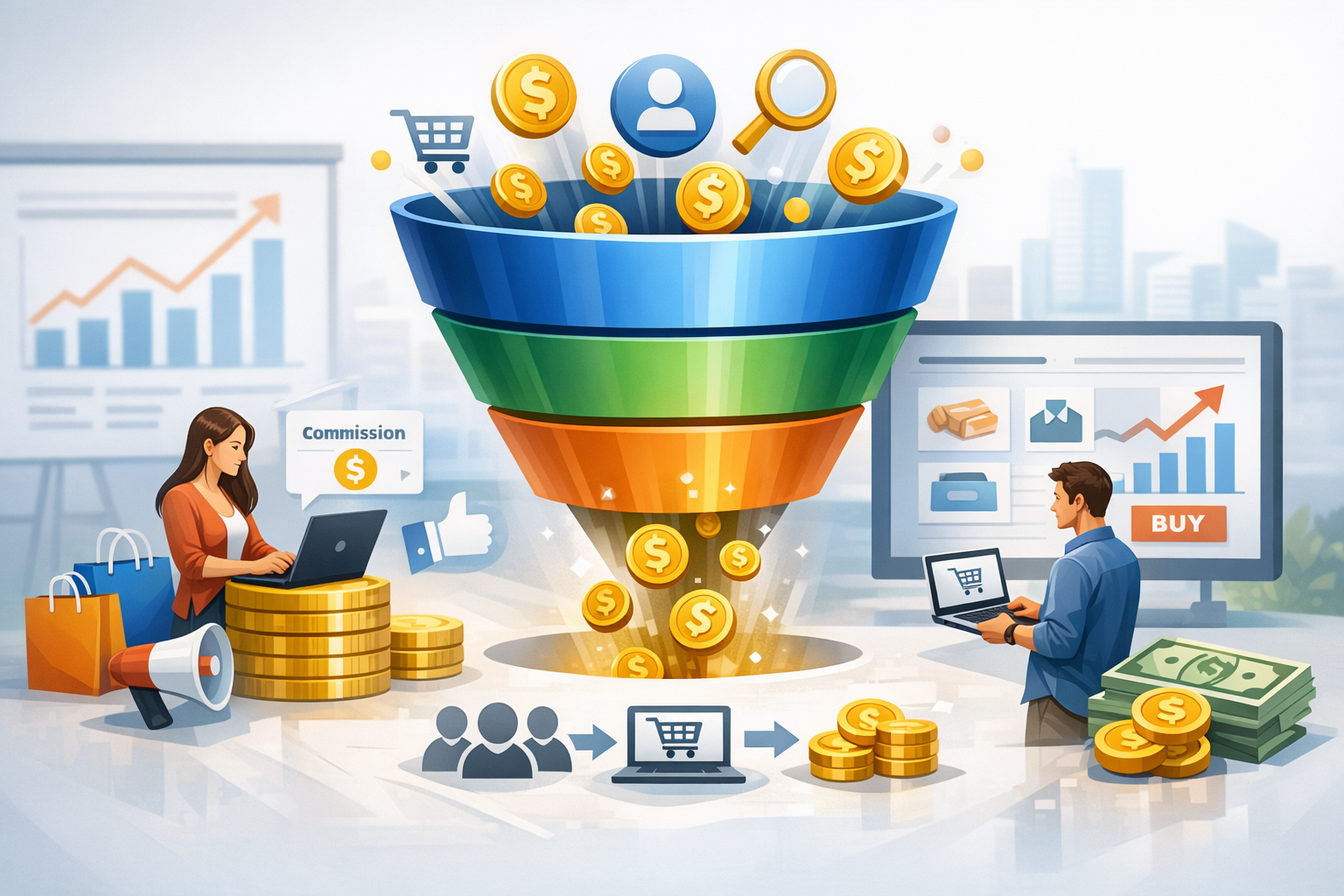
An Easy Commission Funnel is a simplified affiliate sales funnel designed to move a potential customer from initial interest toward an affiliate offer. The funnel may include a capture page, an email follow-up sequence, educational content, and a recommendation or sales page.
The central idea is straightforward:
- Attract people who are interested in a relevant problem or goal.
- Give them a clear reason to learn more.
- Capture permission to continue the conversation, usually through email.
- Present a suitable affiliate product or opportunity.
- Follow up with helpful information rather than relying on one visit.
For example, someone interested in starting a home-based business might discover a social media post about beginner affiliate marketing. That post can lead to a capture page, where the visitor learns more and chooses whether to continue. From there, an email sequence can explain how the funnel works and direct interested subscribers to the relevant offer.
The funnel does not replace trust, useful content, or consistent marketing. It simply gives those activities a structure.
Why Beginners Use a Funnel Instead of a Direct Affiliate Link
A direct affiliate link can be useful in some situations, but it gives you very little control over the visitor experience. If someone clicks and leaves without taking action, you may have no practical way to reconnect with that person.
A funnel can improve the process in several important ways.
It creates a clear customer journey
New marketers often share links in multiple places without explaining what visitors should do next. A funnel helps you design that journey in advance. Each page or message has a specific purpose, such as introducing a problem, collecting an email address, or explaining an offer.
It supports follow-up
Many people are not ready to make a decision the first time they see an opportunity. Email follow-up allows you to answer questions, share educational content, and remind subscribers about the next step. This is particularly useful for an online business offer that requires more explanation than a simple retail purchase.
It makes your marketing easier to measure
With a basic funnel, you can monitor useful indicators such as page visits, opt-ins, email opens, clicks, and conversions. These numbers do not guarantee success, but they can show where people are losing interest. For example, many visitors but few sign-ups may indicate that the capture page needs a clearer message.
Easy Commission Funnel: The Main Stages
Before promoting any funnel, it helps to understand the role of each stage. A beginner-friendly system does not need dozens of pages. It needs a logical sequence that respects the visitor’s time.
1. Traffic and attention
Traffic is the starting point. It can come from short videos, blog posts, social media discussions, search engine optimization, online communities, paid advertising, or personal networking. Your traffic source should match the audience you want to help.
A useful rule is to make the content valuable even if the reader does not click your link. A post about choosing a first affiliate niche, for instance, can explain how to evaluate audience demand, personal interest, and available products. The call to action can then invite readers to explore a funnel that supports the next step.
2. The capture page
The capture page is usually a focused page that explains what visitors can learn or access. Its job is not to answer every possible question. Its job is to communicate a clear benefit and encourage an interested visitor to continue.
A strong capture page generally includes:
- A headline that addresses a specific audience or problem.
- Brief supporting text that explains what happens next.
- A visible call to action.
- Honest expectations without exaggerated income claims.
- A simple layout that works well on mobile devices.
If you want to review the basic concept before building your own promotional plan, you can learn more about Easy Commission Funnel and see how the capture process is presented.
3. Email follow-up
Email marketing gives you a way to continue helping people after they leave the page. A beginner sequence might include a welcome message, an explanation of the problem, a practical tip, an overview of the recommended solution, and a reminder to evaluate the offer carefully.
Keep the sequence conversational. Avoid sending messages that only repeat a sales pitch. Subscribers are more likely to remain engaged when each email answers a question or provides a useful next step.
4. The affiliate offer
The offer should be relevant to the reason someone entered the funnel. If your content is about learning affiliate marketing, sending visitors to an unrelated product can damage trust. Explain what the offer does, who may benefit from it, and what people should consider before making a decision.
How to Set Up an Easy Commission Funnel Step by Step
Step 1: Choose one audience and one problem
Do not begin by promoting everything to everyone. Select a specific audience, such as beginners who want to learn affiliate marketing without creating their own product. Then identify a problem that audience recognizes, such as not knowing how to collect leads or organize follow-up.
This focus makes your content, capture page, and emails easier to write. It also helps visitors quickly decide whether your message is relevant to them.
Step 2: Create one simple message
Your message should connect the audience’s problem with a realistic next step. For example: “Learn how a simple affiliate funnel can organize your first lead-generation process.” This is clearer and more trustworthy than promising fast money or guaranteed commissions.
Step 3: Select a traffic channel
Choose one primary traffic method while you learn. A beginner may start with search-friendly blog content, short-form video, or helpful posts in an appropriate online community. Each channel has different rules and expectations, so read the platform guidelines and disclose affiliate relationships where required.
Trying five channels at once can make it difficult to understand what is working. Build a small library of useful content in one place first, then expand when you can maintain quality.
Step 4: Send traffic to the funnel
Use a relevant call to action rather than dropping a link without context. Tell people what they can expect when they click. For instance, “Explore this beginner-friendly funnel to see how a capture page and follow-up process can work together.” You can also discover Easy Commission Funnel as a reference when planning the path your audience will take.
Step 5: Add helpful follow-up
Plan at least a few follow-up messages before actively sending traffic. One message can welcome the subscriber, another can explain lead generation, and a later message can discuss how to assess an affiliate program. Include a clear unsubscribe option and respect email marketing laws and platform policies.
Step 6: Review the data and improve one element
Do not change everything after one day. Allow enough activity to identify a pattern, then test one improvement. You might revise the headline, make the call to action more specific, shorten a long email, or publish content that better matches the audience’s questions.
Common Beginner Mistakes to Avoid
Promoting before understanding the offer
Read the available information and understand what the funnel or program includes. If you cannot explain the basic process clearly, your audience may become confused. Honest limitations are also important. Avoid claiming that a system is effortless, automatic, or suitable for everyone.
Using hype instead of education
Income-focused claims may attract clicks, but they can create unrealistic expectations and reduce trust. Explain the work involved, including learning marketing, creating content, testing messages, and responding to questions. Affiliate marketing is a business model, not a shortcut that removes the need for effort.
Sending traffic with no tracking plan
Even a simple spreadsheet can record the date, traffic source, content topic, clicks, sign-ups, and follow-up results. Tracking helps you make decisions based on evidence instead of guessing.
Ignoring the audience after the first click
A funnel works best when it supports a relationship. Continue publishing useful information and answer common questions. If every message is a promotion, subscribers may stop opening your emails.
How to Make Your Funnel More Trustworthy
Trust is one of the most important assets in affiliate marketing. Start by being transparent about affiliate relationships. Tell readers that you may earn a commission if they take an action through a link, where appropriate. This does not need to dominate the article, but it should be clear and easy to understand.
Use realistic language throughout your funnel. Instead of saying “make money while you sleep,” explain that automation can reduce repetitive tasks while marketing, testing, and audience development still require ongoing work. Results can differ considerably between individuals.
It is also helpful to provide alternatives. Explain who may not be a good fit for the offer, what skills a beginner may need to develop, and what questions to ask before registering. Balanced information makes your recommendation more credible.
When an Easy Commission Funnel Makes Sense
This type of funnel may be useful if you want a structured starting point for promoting an affiliate opportunity, collecting leads, and learning the basics of online marketing. It can be especially helpful when you do not yet have the technical skills or budget to build a complex custom sales funnel.
It may not be the right solution if you expect instant results, do not want to create content, or are unwilling to learn how email marketing and traffic generation work. A funnel is a tool. The quality of your audience, message, follow-up, and offer still matters.
A Practical 30-Day Beginner Plan
A simple schedule can help turn the idea into manageable tasks:
- Days 1–5: Choose your audience, study its common questions, and define one problem your funnel will address.
- Days 6–10: Review the funnel, write a clear disclosure, and prepare your first capture-page promotion.
- Days 11–17: Create several helpful posts, videos, or articles connected to the audience’s problem.
- Days 18–23: Draft a short email follow-up sequence focused on education and evaluation.
- Days 24–30: Begin sending qualified traffic, record basic results, and improve one part of the process.
This plan is not a promise of earnings. It is a way to build a learning habit and gather information about what your audience responds to.
Final Thoughts
An Easy Commission Funnel can give beginners a practical framework for connecting content, lead generation, email marketing, and affiliate promotion. The strongest results come from treating the funnel as part of a broader business process rather than a magic link.
Choose a focused audience, provide useful information, set honest expectations, and improve your process gradually. If you are ready to examine the next step, explore the funnel and decide whether its approach fits your goals. Take time to understand the offer before promoting it, and remember that effort, strategy, consistency, traffic, and market conditions all influence outcomes.