
Starting affiliate marketing can feel overwhelming when you are faced with landing pages, traffic sources, email software, follow-up messages, and unfamiliar marketing terms. An Easy Commission Funnel can simplify that process by giving beginners a structured path for turning attention into leads and, eventually, qualified affiliate referrals. The funnel does not replace consistent effort or guarantee income, but it can help organize the steps that are often confusing when you are building an online business for the first time.
This guide explains how to use an Easy Commission Funnel as the foundation of a beginner-friendly email marketing strategy. You will learn what the funnel does, how to prepare your message, how to attract the right visitors, and how to improve your process without making unrealistic promises about results.
What an Easy Commission Funnel Does
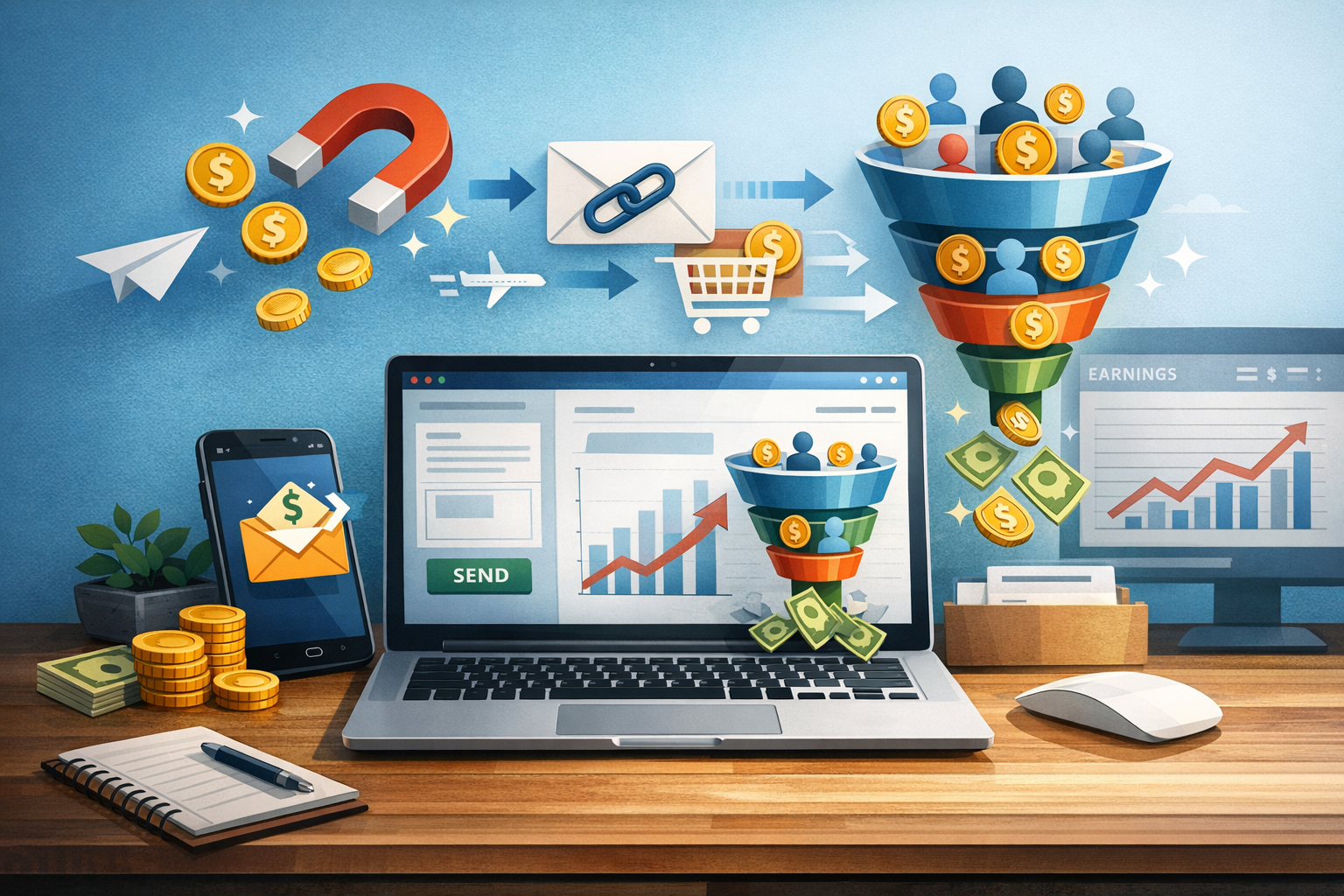
At its simplest, an affiliate funnel guides a person through a series of connected stages. Instead of sending traffic directly to an affiliate offer and hoping visitors take action, you create a more helpful journey:
- Awareness: A potential customer discovers your content, recommendation, or social media post.
- Lead capture: The visitor reaches a page designed to encourage an email signup or another permitted action.
- Follow-up: Helpful emails build familiarity and explain the problem the offer may solve.
- Referral: Interested subscribers can review the affiliate product or opportunity through your tracked link.
An Easy Commission Funnel can make the lead-generation stage more organized by providing a starting point for presenting an offer and collecting interest. Your responsibility is to connect that funnel to useful content, honest communication, and a traffic strategy that matches your audience.
It is important to view the funnel as a system rather than a magic button. A page may be technically ready, but results can still vary based on your audience, traffic quality, positioning, follow-up, consistency, skills, and the offer itself.
Why Email Belongs in an Easy Commission Funnel
Social media posts and search results can introduce your business, but you do not control how long those channels will show your content. Email gives you a permission-based way to continue a conversation with people who have chosen to hear from you.
A useful email list can help you:
- Explain an affiliate offer in more detail than a short post allows.
- Answer common beginner questions before someone makes a decision.
- Share educational content and relevant resources over time.
- Measure which subjects and links generate the most engagement.
- Build an asset that is less dependent on one social platform.
Email marketing should not mean sending the same promotion every day. A better approach is to provide context first. Explain the problem, discuss realistic options, show how a process works, and clearly disclose when you may earn a commission from a recommendation.
Prepare Your Funnel Before Sending Traffic
Before publishing links, spend time clarifying what you are offering and who should see it. This preparation reduces wasted traffic and makes your content more relevant.
Choose one audience and one problem
A beginner funnel is easier to understand when it serves a specific audience. For example, you might focus on people who want to learn affiliate marketing without building a complicated website, or beginners who need a simple lead-generation process for a side business.
Avoid trying to speak to everyone interested in making money online. That broad audience includes people with different experience levels, budgets, goals, and expectations. A narrower message allows you to write clearer headlines and more useful emails.
Review the destination carefully
Visit the capture page or offer you intend to recommend. Read the wording, review the privacy information, and understand what happens after a visitor submits their details. Check whether the program has rules about advertising methods, brand names, email promotion, or paid traffic.
If you want to examine the opportunity and its capture-page process, you can learn more about Easy Commission Funnel. Review the information for yourself before deciding whether it fits your audience and business model.
Create a simple value proposition
Your value proposition should explain why someone should pay attention without promising a financial outcome. A responsible example might be: “A straightforward starting point for learning how an affiliate lead funnel works.” This is more credible than suggesting that every visitor will earn commissions quickly.
Keep the message consistent across your social posts, articles, emails, and funnel page. If a visitor expects a free educational guide but encounters an unrelated sales pitch, trust can disappear quickly.
Build a Practical Email Follow-Up Sequence
A follow-up sequence is a planned set of emails delivered after someone joins your list. You do not need dozens of messages to begin. A short sequence of five to seven emails can give you enough room to educate, answer questions, and make a relevant recommendation.
Email one: Set expectations
Welcome the subscriber and explain what they can expect from you. Mention the type of information you will send, how often you may email, and how they can unsubscribe. If there is a promised resource, deliver it immediately.
This first email should focus on clarity rather than a hard sell. A friendly introduction can be more valuable than a long list of claims.
Email two: Explain the core problem
Describe why beginners often struggle with affiliate marketing. They may send people directly to offers, fail to collect leads, or publish inconsistent content without tracking what works. Explain how a simple funnel creates a more organized path from discovery to follow-up.
Email three: Teach one useful concept
Choose a practical lesson, such as how to write a helpful call to action, how to identify a target audience, or how to distinguish traffic quantity from traffic quality. Teaching something useful demonstrates your approach and gives subscribers a reason to keep reading.
Email four: Introduce the solution
Now explain how an Easy Commission Funnel may fit into the process. Be specific about the role of the funnel: it can help present a capture page and direct interested people into the next stage of your marketing system. Do not describe it as automatic income or imply that the tool removes the need for traffic and follow-up.
You can invite readers to explore the funnel and decide whether it matches their goals. Include an affiliate disclosure when required by law, platform policy, or your relationship with the program.
Email five: Handle objections honestly
Address reasonable concerns. Is technical experience required? What will the subscriber need to do personally? Are there costs beyond the initial setup? How much time might learning and testing require? If you do not know an answer, say so and direct readers to the official information rather than guessing.
Email six: Offer a next step
Give subscribers a clear but low-pressure action. They might review the funnel, read an educational article, create a content plan, or compare the opportunity with other options. A single primary call to action is usually easier to follow than several competing links.
Attract the Right Visitors
A funnel only has an opportunity to work when relevant people reach it. For beginners, organic content is often a practical place to start because it allows you to develop communication skills without immediately committing to an advertising budget.
Use problem-focused content
Create articles, videos, or social posts that answer questions your target audience is already asking. Examples include:
- What is an affiliate sales funnel?
- How does email lead generation work?
- What should a beginner include in a follow-up sequence?
- How can someone evaluate an online business opportunity?
Each piece should solve a small problem and lead naturally to the next step. Avoid publishing content that exists only to place an affiliate link. Readers are more likely to trust a recommendation when the surrounding information is genuinely useful.
Consider your traffic source carefully
Search engine optimization can bring visitors who are actively researching a topic, while social media may help you build awareness and conversations. Community participation can also be effective when you follow the platform rules and contribute before promoting anything.
Paid advertising is another option, but beginners should understand the costs, targeting requirements, tracking needs, and advertising policies first. Never assume that spending more will automatically produce profitable traffic.
Track the Funnel Without Overcomplicating It
Measurement helps you identify where people stop moving through the process. Start with a small set of indicators:
- Traffic: How many people visit your content or capture page?
- Opt-in rate: What percentage of visitors join your list?
- Email engagement: Are subscribers opening and clicking your messages?
- Referral activity: Are people reaching the recommended offer?
- Conversions: Do completed actions occur, and do they comply with the program terms?
These numbers are clues, not judgments about your ability. Low traffic suggests that you need more distribution or better search targeting. Good traffic but few signups may indicate that the page or message needs improvement. Signups without clicks may mean your emails are not making the next step clear.
Change one important element at a time when possible. Test a headline, opening paragraph, call-to-action wording, or email subject line. Making many changes at once makes it difficult to know what affected the outcome.
Common Beginner Mistakes to Avoid
Promising fast or guaranteed income
Affiliate marketing is performance-based, and results vary. Your effort, skills, traffic, offer quality, consistency, market conditions, and other circumstances all matter. Responsible marketing explains the opportunity without guaranteeing commissions or a specific income.
Sending traffic before testing the experience
Click through your own links, read the emails, and confirm that the page works on a mobile device. A broken link or confusing transition can waste attention and reduce trust.
Collecting leads without a plan
An email list is not useful merely because it contains addresses. Decide what you will teach, how often you will communicate, and what type of recommendation is relevant before inviting people to subscribe.
Ignoring compliance and privacy
Use an email service that supports consent and unsubscribe requirements. Follow applicable email marketing laws, privacy rules, affiliate disclosure guidelines, and advertising policies. Avoid buying email lists or adding people who did not request your messages.
How to Improve Your Funnel Over Time
Once the basic process is active, improve it through regular observation rather than constant redesign. Ask subscribers which questions remain unanswered. Review the links that receive attention. Look for sections of your content that generate discussion, and create follow-up material around those subjects.
You can also build simple supporting resources, such as a beginner checklist, a glossary of funnel terms, or a comparison worksheet. These resources make your lead-generation strategy more useful and can give subscribers a reason to remain engaged.
If you are ready to take a closer look, you can get started with affiliate marketing by reviewing the Easy Commission Funnel information and deciding whether the approach suits your own goals. Treat the review as research, not as a guarantee of results.
A Responsible Next Step
An Easy Commission Funnel can give a beginner a clearer framework for connecting content, lead generation, email marketing, and affiliate promotion. The most effective use of that framework is not to push people toward a link as quickly as possible. It is to understand your audience, set accurate expectations, offer helpful information, and create a follow-up process that respects the subscriber.
Call to action: Review the funnel, check its terms, and write a simple one-week content and email plan before promoting it. If the process fits your audience and you are prepared to learn, test, and communicate consistently, start building your online business with a realistic, value-first approach.
There is no guaranteed shortcut to affiliate success, but a well-organized funnel can make your next steps easier to understand. Use it as a foundation, continue improving your marketing skills, and let evidence from your audience guide future decisions.