
Starting affiliate marketing can feel complicated when you are faced with landing pages, email lists, traffic sources, follow-up messages, and tracking tools. An Easy Commission Funnel can simplify that process by giving beginners a clearer path from attracting a visitor to introducing an offer. Instead of sending people directly to a sales page and hoping they buy, you can use a simple funnel to build trust and guide each prospect through the next step.
This beginner-friendly guide explains how to approach your first affiliate funnel with Easy Commission Funnel, what each stage is designed to do, and how to promote it responsibly. The goal is not to promise instant income. A funnel is a marketing system, not a guarantee of commissions. Results depend on your audience, traffic strategy, message, consistency, and ability to improve over time.
What Is an Easy Commission Funnel?
An Easy Commission Funnel is a simplified affiliate marketing funnel designed to help move potential customers through a basic online marketing journey. In most cases, that journey includes a capture page, a follow-up process, and one or more offers that are relevant to the visitor’s interests.
The word “easy” should not be confused with “effortless.” A funnel may reduce the technical workload, but you still need to choose an audience, create useful communication, attract appropriate traffic, and follow the program’s promotional rules. The advantage is that you can begin with a structured framework rather than building every page and automation from the ground up.
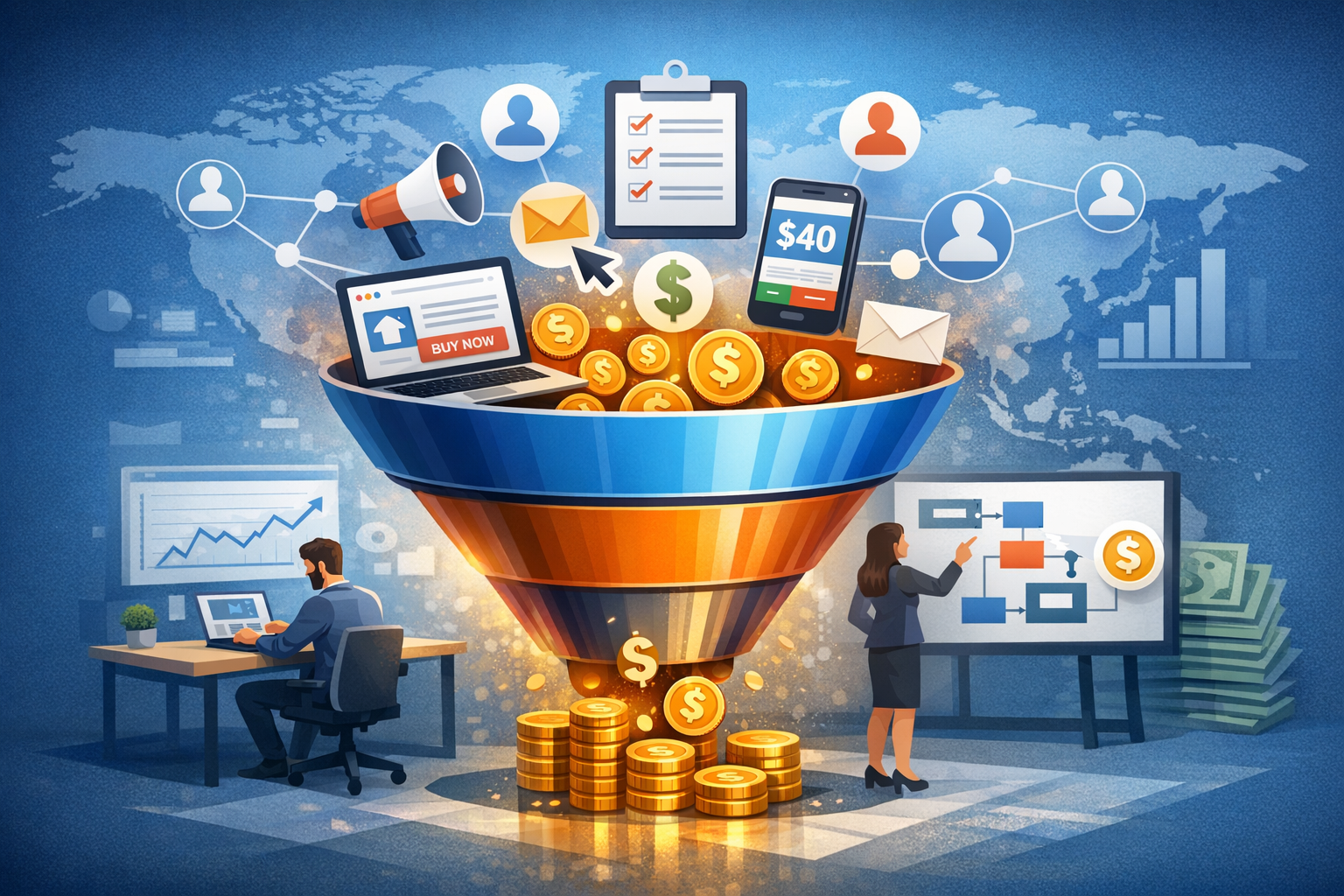
A typical funnel may look like this:
- Traffic source: People discover your content, recommendation, video, social post, or advertisement.
- Capture page: Interested visitors arrive at a page that explains the next step and may invite them to subscribe.
- Follow-up: Email or other permitted communication provides helpful information and reminders.
- Offer: Prospects learn about a relevant product or opportunity and decide whether it fits their needs.
- Measurement: You review clicks, subscriptions, and conversions to identify what needs improvement.
To learn more about Easy Commission Funnel, review the information carefully and consider whether its approach matches your goals, experience, and available time.
Why Use a Funnel Instead of a Direct Affiliate Link?
A direct affiliate link can be useful in some situations, but it often gives you little control over the visitor experience. If someone clicks and leaves without taking action, you may have no way to provide additional context or follow up later.
An affiliate funnel creates more opportunities to help the prospect before they make a decision. For example, a visitor may not be ready to act after one page view. A short email series, tutorial, or comparison can answer questions and clarify who the offer is suitable for.
A funnel can also help you learn more about your marketing. You may discover that your content attracts clicks but few subscribers, or that people subscribe but do not engage with later messages. Those observations are valuable because they show where the customer journey needs attention.
However, a funnel should not be used to hide important information or pressure people into purchasing. Effective affiliate marketing depends on relevance, transparency, and a good user experience. Tell readers when a link may earn you a commission, avoid unsupported claims, and recommend only offers you can explain accurately.
Easy Commission Funnel Setup: A Beginner’s Step-by-Step Plan
1. Choose a specific audience
Before sharing any link, decide who you are trying to help. “Anyone who wants to make money online” is too broad to guide useful content. A more focused audience might be beginners looking for a simple affiliate marketing system, people building a work-from-home side hustle, or creators who want a basic lead generation process.
A specific audience makes your messaging clearer. You can discuss the questions that group is most likely to ask, such as how to collect leads, how to write a first email, or how to promote without buying expensive advertising.
2. Define one practical problem
Your funnel should connect to a problem rather than simply announce an opportunity. A beginner may be struggling to organize affiliate links, understand follow-up marketing, or create a repeatable process for new visitors.
Write a one-sentence statement such as: “I help new affiliate marketers understand how a simple capture page and follow-up process can organize their first campaign.” This statement can guide your social posts, emails, videos, and landing page recommendations.
3. Review the capture page and offer
Visit the funnel yourself before promoting it. Check whether the message is understandable, whether the next step is obvious, and whether the claims are presented responsibly. Look for information about costs, terms, privacy, support, and what a new participant is expected to do.
You should be able to explain the offer in plain language. If you cannot describe who it is for, what action a visitor takes, and what limitations may apply, spend more time researching before sending traffic.
4. Create a useful bridge between content and the funnel
A bridge is the content that prepares someone for the next step. It might be a tutorial, checklist, short video, or email explaining the basics of affiliate funnels. Its purpose is to set expectations and make the recommendation relevant.
For example, instead of posting “Click here to make money,” you could publish a short guide explaining why beginners often need a capture page and follow-up system. You can then invite readers who want to examine one possible solution to explore the Easy Commission Funnel.
This approach attracts people who are genuinely interested in the subject instead of relying on vague income claims. It also gives you an opportunity to demonstrate knowledge before asking for a click.
5. Plan a simple follow-up sequence
If the funnel includes email marketing, plan a short sequence that respects the subscriber’s attention. You do not need dozens of messages to begin. A basic sequence could include:
- Email one: Welcome the subscriber and explain what they can expect.
- Email two: Teach one foundational concept, such as the difference between traffic and leads.
- Email three: Explain a common beginner mistake and how to avoid it.
- Email four: Introduce the funnel as one option and explain who may benefit from learning more.
- Email five: Answer common questions and provide a clear, non-pressure next step.
Keep every message connected to the reason the person subscribed. Include an unsubscribe option and follow the email marketing laws and platform policies that apply to your audience. Do not purchase email lists or add people without permission.
Traffic Strategies for a New Affiliate Funnel
A funnel cannot work without visitors, but more traffic is not automatically better. The most useful traffic comes from people who are interested in the problem your content addresses.
Organic content
Search-focused blog posts, educational videos, short social media tutorials, and helpful community answers can attract visitors over time. Focus each piece on one question, such as how an affiliate capture page works or what to include in a welcome email.
Avoid copying promotional text repeatedly across platforms. Add your own explanation, examples, and honest observations. Search engines and readers are more likely to value content that demonstrates firsthand understanding.
Paid advertising
Paid traffic can produce faster testing data, but it introduces financial risk. Start only after checking the affiliate program’s advertising rules and the policies of the platform you plan to use. Test a small budget you can afford to lose, measure the full journey, and do not judge a campaign by clicks alone.
Personal networks and communities
Relevant communities can be useful when you contribute before promoting anything. Read the rules, answer questions, and avoid dropping affiliate links where they are not welcome. Trust is difficult to build and easy to damage through aggressive posting.
How to Improve Your Easy Commission Funnel Over Time
Your first version is a starting point, not a final product. Give each change enough time to produce meaningful feedback, then improve one part of the process at a time.
- Review the message: Does your content clearly explain the problem and next step?
- Check the capture page: Is the page easy to understand on both desktop and mobile devices?
- Improve your emails: Are your messages useful, readable, and connected to the subscriber’s original interest?
- Track key actions: Monitor visits, opt-ins, email engagement, and conversions where tracking is available.
- Ask for feedback: A few honest responses can reveal confusion that analytics cannot show.
Do not make decisions based on one unusually good or bad day. Traffic quality, seasonality, audience size, and many other factors can affect performance. Also remember that a high click-through rate does not necessarily mean an offer is a good fit for the audience.
If you are still comparing approaches, you can explore the funnel as part of your research. Read the details, understand the process, and make an informed decision rather than treating any marketing system as a shortcut.
Common Beginner Mistakes to Avoid
Promoting before understanding the offer
Sharing a link without reviewing the experience can lead to inaccurate explanations and disappointed visitors. Test the process and keep your description factual.
Using unrealistic income language
Statements about guaranteed commissions, instant passive income, or effortless financial freedom are misleading. Affiliate results vary based on effort, skills, strategy, traffic, consistency, audience fit, and other circumstances. Use educational language and describe the work involved.
Sending traffic without a clear purpose
A random collection of posts rarely creates a coherent customer journey. Every piece of content should have a reason, whether that is answering a question, building awareness, collecting an opt-in, or helping a subscriber evaluate an offer.
Ignoring compliance and trust
Disclose affiliate relationships clearly, respect privacy, use permission-based email practices, and follow the rules of each platform. Trust is not an optional feature of a sustainable online business.
Is Easy Commission Funnel Right for You?
An Easy Commission Funnel may be worth investigating if you want a more organized starting point for affiliate marketing and do not want to build every funnel component yourself. It may be less suitable if you are unwilling to create content, learn basic marketing, communicate with an audience, or review performance.
Consider your available time, budget, technical comfort, and preferred marketing method. A funnel can support your work, but it cannot replace audience research, useful content, ethical promotion, and consistent testing.
Final Steps for Getting Started
Begin with one audience, one problem, and one clear message. Review the Easy Commission Funnel offer, create a helpful piece of bridge content, and choose one traffic source you can manage consistently. Then build a short follow-up sequence and track what happens at each stage.
If you want to examine the opportunity for yourself, get started with affiliate marketing by reviewing the funnel details and deciding whether it fits your goals. Take time to understand the terms before participating, and remember that no system guarantees income or specific results.
Used thoughtfully, an Easy Commission Funnel can give a beginner a practical structure for connecting content, lead generation, email marketing, and affiliate promotion. The real advantage comes from using that structure to help people make informed decisions—not from treating the funnel as a substitute for genuine marketing work.