
Many beginners enter affiliate marketing with a product link but no clear plan for attracting visitors, building trust, or following up with interested people. A simple lead funnel can solve that problem by giving your audience a helpful first step before presenting an affiliate offer. Easy Commission Funnel is designed around this kind of straightforward process, making it easier to understand how a capture page, follow-up sequence, and offer can work together.
In this guide, you will learn how to build a beginner-friendly affiliate lead funnel, what each stage does, and how to use Easy Commission Funnel responsibly as part of an online business strategy. The objective is not to promise instant commissions. Instead, it is to create a repeatable system that helps you connect with the right audience and communicate useful information consistently.
What an Affiliate Lead Funnel Actually Does
An affiliate lead funnel is a planned path that moves a potential customer from first discovering your content to learning more about a relevant product or service. Rather than sending every visitor directly to an offer, the funnel gives you an opportunity to provide value and continue the conversation.
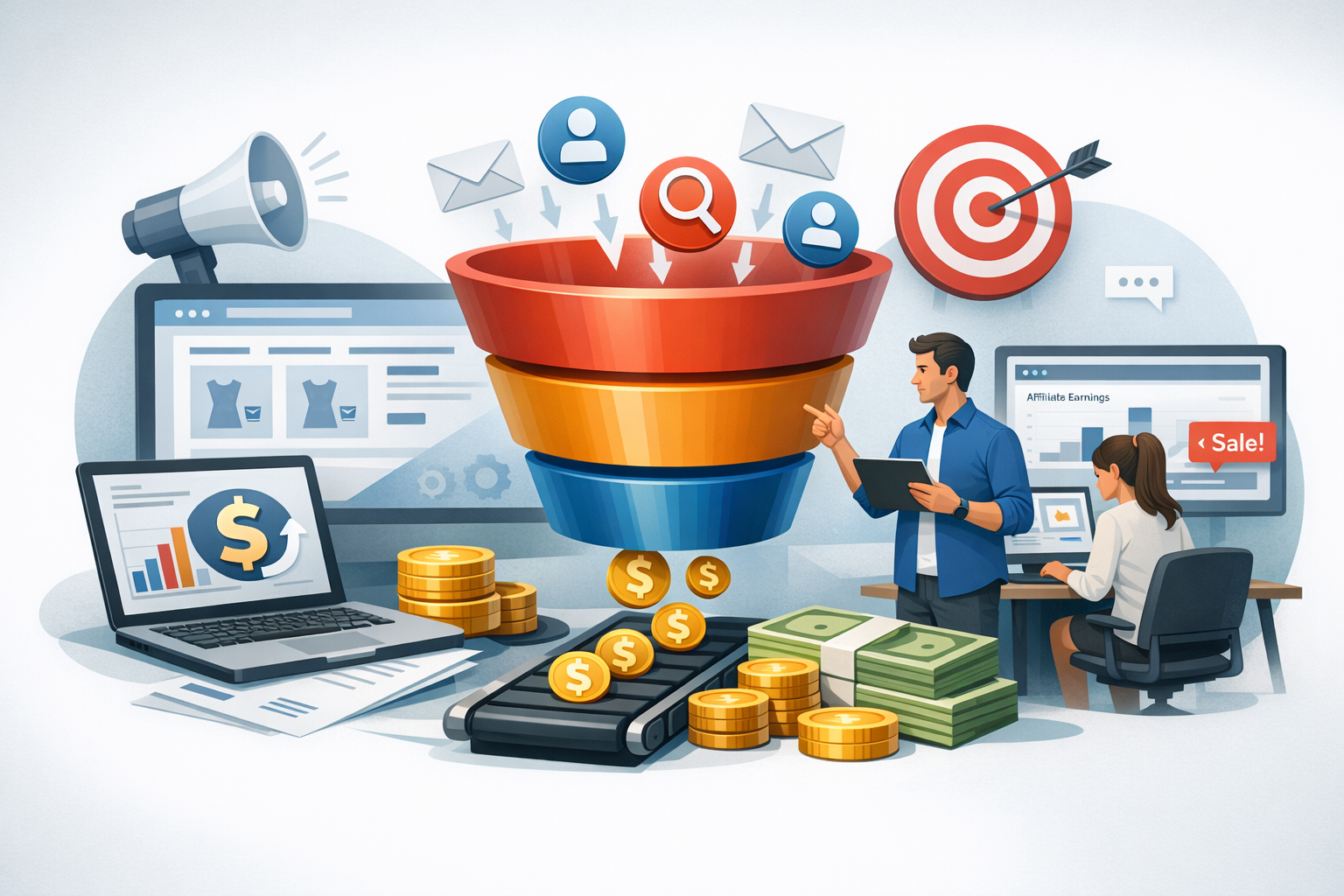
A basic affiliate funnel usually includes four stages:
- Awareness: A person discovers your blog post, video, social media content, or advertisement.
- Capture: The visitor reaches a landing page and chooses whether to join your email list or request more information.
- Nurture: Follow-up emails provide education, examples, and helpful recommendations.
- Action: The subscriber visits an affiliate offer and decides whether it fits their needs.
This structure is useful because most people are not ready to buy the first time they see a promotion. A funnel lets you build familiarity instead of relying on a single click. It also gives you a way to communicate with people who were interested enough to subscribe but were not ready to act immediately.
How Easy Commission Funnel Fits Into the Process
Easy Commission Funnel can serve as the central offer or funnel resource in your affiliate marketing workflow. Its capture page approach helps simplify the technical side of presenting an opportunity to interested visitors. Instead of starting with a complicated website, a beginner can focus on choosing an audience, creating useful content, and directing relevant traffic to the funnel.
To learn more about Easy Commission Funnel, review the information carefully and consider how its process fits your goals, experience, and available time. A funnel is a tool, not a substitute for learning marketing fundamentals or understanding the needs of your audience.
The most effective use of Easy Commission Funnel begins with a clear connection between your content and the offer. For example, an article about beginner affiliate marketing could introduce readers to the value of using a simple funnel. A visitor who wants a more structured next step may then choose to explore the capture page.
Step 1: Choose a Specific Audience and Problem
A common mistake is trying to market to everyone interested in making money online. Broad audiences are difficult to understand and even harder to serve with relevant content. A more focused audience gives you clearer ideas for articles, emails, and calls to action.
Consider a group such as:
- Employees looking for a manageable online side project
- Beginners who have never used an affiliate sales funnel
- Creators who want to collect leads from educational content
- People interested in learning how email marketing supports affiliate sales
Next, identify one problem that group is experiencing. They may not know how to capture leads, may feel overwhelmed by technology, or may be sending traffic directly to affiliate links without building an audience. Your content should address that problem before introducing Easy Commission Funnel as a possible solution.
Use a Simple Audience Statement
Write a sentence such as: “I help beginner affiliate marketers create a simple first funnel without getting lost in unnecessary technology.” This statement does not need to appear publicly, but it can guide your content decisions and keep your promotions focused.
Step 2: Create Content That Leads Naturally to the Funnel
Your content should answer a question or solve a small problem related to the funnel. This could include explaining how a lead magnet works, showing why an email list matters, or comparing direct-link promotion with a basic capture process.
Useful content ideas include:
- How to start affiliate marketing with a small audience
- Why affiliate marketers use landing pages
- What to include in a beginner email follow-up sequence
- How to evaluate an online business opportunity before promoting it
- Common mistakes when building a first affiliate funnel
Stay close to the reader’s original question. If your article explains lead generation, do not suddenly promote several unrelated products. One clear topic and one relevant next step usually create a better experience than a page filled with competing offers.
When discussing Easy Commission Funnel, be transparent about what it is and what it is not. It may help organize the first stages of a funnel, but results still depend on factors such as traffic quality, consistency, communication skills, testing, and the relevance of the offer. Avoid language that suggests guaranteed earnings or effortless passive income.
Step 3: Send Visitors to a Focused Capture Page
A capture page should have one primary purpose: encourage an interested visitor to take a clearly explained next step. That step might be entering an email address, learning more about an opportunity, or reviewing the details of a program.
Before sending traffic, check that the page communicates:
- What the visitor is being offered or invited to explore
- Who the opportunity is designed for
- What action the visitor should take next
- Where the visitor can find additional information
Keep your promotional message consistent with the page. If your article promises a beginner-friendly introduction, the linked page should not be presented as an advanced technical system. Matching expectations helps build trust and can reduce confusion.
You can explore the funnel here when you are ready to see how the capture-page process is presented. Read the terms, understand the next steps, and make your own informed decision before recommending it to others.
Step 4: Plan a Helpful Follow-Up Sequence
Capturing a lead is only the beginning. Without useful follow-up, subscribers may forget why they joined your list or feel that they were added only to receive promotions. Email marketing works best when each message has a clear purpose and provides information the reader can use.
A Practical Five-Email Sequence
Email one: Welcome and expectations. Thank the subscriber, explain what they can expect, and share one simple tip related to their goal. If you use an affiliate disclosure, make it easy to find and understand.
Email two: Explain the problem. Describe why many beginners struggle when they send traffic directly to an affiliate link. Explain the value of having a clear path for educating and following up with interested people.
Email three: Teach a practical step. Show readers how to select a target audience, write a useful call to action, or create a simple content plan. The email should be useful even if the reader does not purchase anything.
Email four: Introduce the relevant solution. Explain how Easy Commission Funnel may help organize the capture process. Be specific about the type of beginner who may find it useful, and acknowledge that it is not the right fit for everyone.
Email five: Invite informed action. Provide a link for people who want to review the opportunity. Encourage them to examine the details and decide based on their own objectives rather than pressure them with artificial urgency.
Always follow applicable email marketing rules and platform policies. Use honest subject lines, provide an unsubscribe option, and avoid adding people to a list without appropriate permission.
Step 5: Choose Realistic Traffic Sources
A funnel cannot work without visitors, but beginners do not need to use every traffic source at once. Select one or two channels that match your strengths and commit to learning how they work.
Organic Content
Blog posts, short videos, tutorials, and social media explanations can attract people who are actively researching affiliate marketing. Organic traffic often takes time, but it can continue bringing visitors after the content is published. Focus on answering specific questions rather than repeating promotional slogans.
Community Participation
Relevant forums, discussion groups, and online communities can help you understand your audience’s concerns. Participate by answering questions and sharing useful guidance. Avoid dropping affiliate links into conversations where they are not requested, since that can damage trust and violate community rules.
Paid Advertising
Paid traffic can be tested later, but it requires a budget, tracking, and careful attention to advertising policies. Start with a small amount only if you understand the potential cost and can afford to learn from the results. Do not assume that more clicks automatically mean more commissions.
How to Measure and Improve Your Funnel
Tracking helps you identify where people stop moving through the process. Important measurements may include:
- Traffic: How many people visit your content or capture page?
- Conversion rate: What percentage of visitors take the desired next step?
- Email engagement: Are subscribers opening and interacting with your messages?
- Offer clicks: How many subscribers review the recommended opportunity?
- Conversions: Are qualified visitors taking the final action?
These numbers are clues, not guarantees. A low capture rate may indicate that your headline, audience, or call to action needs improvement. Strong email engagement but few offer clicks may mean the recommendation is not aligned with the audience’s needs. Test one change at a time so you can learn what influenced the result.
Do not judge a funnel after only a few visitors. Early data can be too limited to reveal a meaningful pattern. Focus on steady improvement, accurate tracking, and feedback from real users.
Common Beginner Mistakes to Avoid
Promoting Before Providing Context
A direct sales pitch may attract a few clicks, but it gives visitors little reason to trust your recommendation. Teach first, then introduce the offer as a relevant next step.
Using Vague Income Claims
Statements about guaranteed commissions, effortless wealth, or fixed earnings are misleading. Results vary according to skills, effort, traffic, strategy, consistency, market conditions, and other circumstances. Honest marketing is more sustainable than exaggerated promises.
Changing Strategies Too Quickly
Building an online business requires testing and patience. If you change your audience, content topic, funnel, and traffic source every week, you may never learn what is working. Make measured changes and keep notes about your tests.
Ignoring the Visitor Experience
Check your links, mobile layout, page loading, email timing, and unsubscribe process. A technically simple funnel can still lose potential customers if the instructions are unclear or the page feels difficult to navigate.
Is Easy Commission Funnel a Good Starting Point?
Easy Commission Funnel may be worth considering if you want a straightforward way to explore affiliate lead generation and do not want to build every funnel component from scratch. It can provide a practical starting point for learning how content, capture pages, and follow-up fit together.
However, the right choice depends on your goals and circumstances. Review the offer, understand any requirements or costs, and consider whether you are prepared to create content, attract relevant visitors, and communicate consistently. A funnel can support your process, but it does not remove the need for ethical marketing and ongoing effort.
Start Building Your Funnel With a Clear Plan
The strongest beginner funnel is usually not the most complicated one. Choose a focused audience, create content around a real problem, direct readers to one relevant capture page, and follow up with helpful information. Over time, use basic measurements to improve the experience rather than chasing unrealistic promises.
If you want to review a simple starting point for your affiliate marketing plan, get started with the Easy Commission Funnel and evaluate the details for yourself. Then build your promotion around education, transparency, and a consistent routine. Those habits can help you develop a more responsible online business foundation, whatever results your testing eventually produces.