
Many beginners set up an affiliate funnel and then wonder why visitors do not immediately click, subscribe, or buy. The missing piece is often follow-up. An Easy Commission Funnel can help organize the journey, but your email sequence is what keeps the conversation going after someone leaves the capture page. With a simple, helpful sequence, you can introduce the offer, answer common questions, and guide subscribers toward an informed decision without relying on aggressive promotion.
This guide explains how to create a beginner-friendly Easy Commission Funnel email sequence, what each message should accomplish, and how to connect email marketing with affiliate lead generation. The goal is not to promise guaranteed commissions. Instead, it is to build a repeatable process based on relevance, trust, consistency, and useful communication.
Why Email Matters in an Easy Commission Funnel
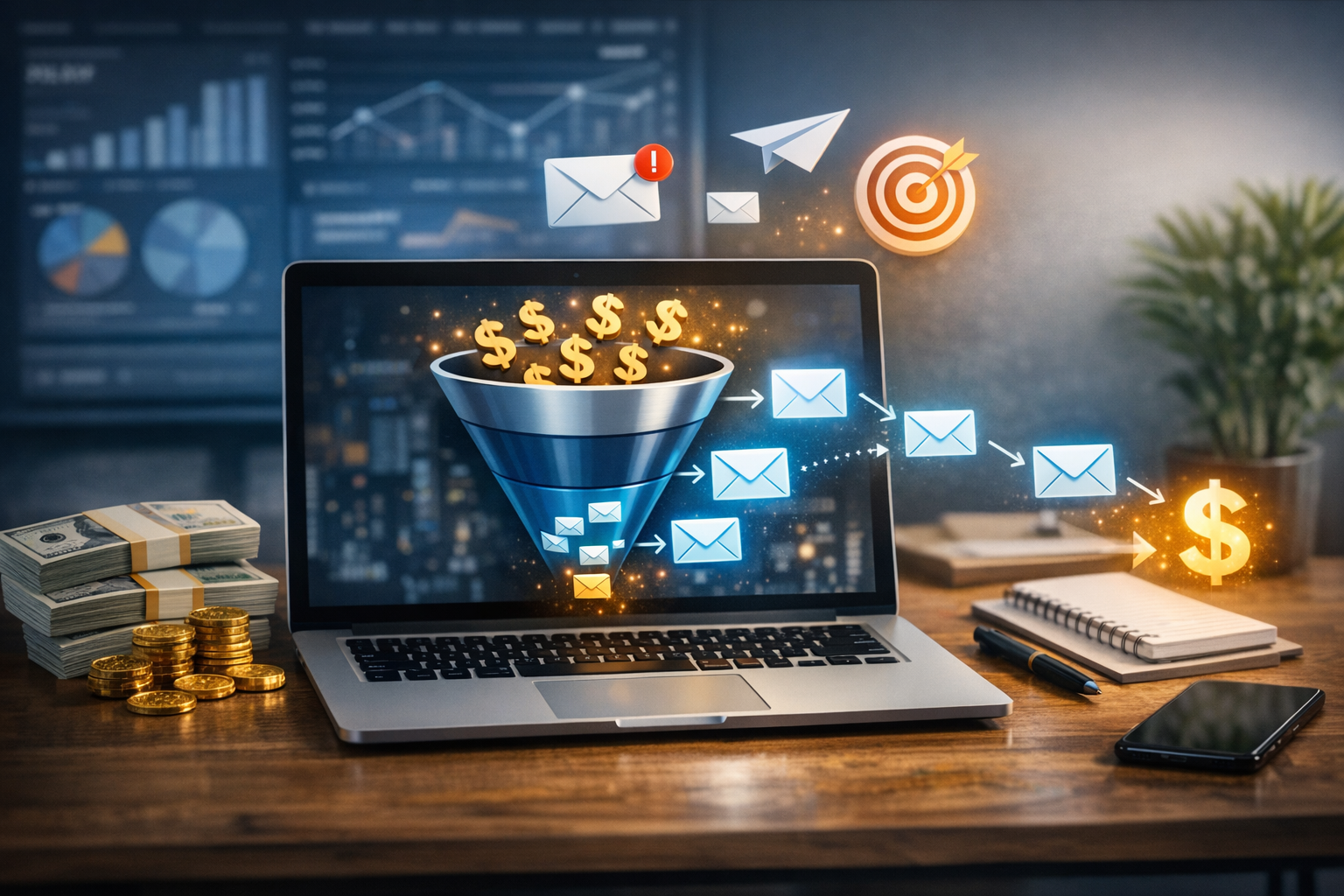
A funnel usually has several stages: attracting attention, collecting a lead, educating the prospect, and presenting a relevant offer. A capture page may collect an email address, but it cannot do all of the educating by itself. Email gives you a direct way to continue the relationship.
People may subscribe while busy, distracted, or unsure whether the opportunity is right for them. A well-planned email sequence gives them time to understand what they signed up for. It also lets you provide context that would be difficult to include on a short landing page.
In practical terms, an Easy Commission Funnel can help simplify the initial funnel setup, while your follow-up sequence supports the human side of affiliate marketing. You can use email to:
- Welcome new subscribers and set expectations.
- Explain how the funnel and offer work.
- Share beginner-friendly online business guidance.
- Address common concerns about time, skills, and cost.
- Invite subscribers to review the opportunity when appropriate.
- Continue helping people who are not ready to act immediately.
If you want to review the basic opportunity before planning your messages, you can learn more about Easy Commission Funnel. Treat the page as a starting point for understanding the process, not as a substitute for your own research and judgment.
Plan the Purpose Before Writing Emails
A common beginner mistake is writing several promotional emails without deciding what each email is supposed to do. Before opening your email platform, define the purpose of the sequence and the action you want readers to take at each stage.
Choose one audience
Your message will be clearer if you know who you are addressing. For example, you might write for someone who wants to start affiliate marketing but has limited technical experience. That audience may need plain-language explanations of capture pages, email automation, traffic, and affiliate links.
Avoid trying to speak to everyone at once. A focused audience helps you choose better examples and avoid making unrealistic claims.
Choose one primary next step
The sequence may eventually lead people to explore Easy Commission Funnel, but every email should have one main action. That action could be replying with a question, reading a short guide, checking a feature, or reviewing the funnel.
Too many links and competing instructions can make a message difficult to follow. Keep the main call to action visible and make sure it matches the email’s topic.
Easy Commission Funnel Email Sequence: A Five-Email Framework
You do not need a complicated automation system to begin. A five-email sequence can give new subscribers a clear introduction while leaving room for your own voice. The timing can vary, but sending the first message immediately and spacing the remaining messages over several days is a practical starting point.
Email 1: Welcome and set expectations
The first email should arrive soon after the subscriber joins your list. Thank the person for signing up, explain what they can expect, and remind them why they showed interest.
Keep this message simple. You could introduce the idea that a funnel helps connect a visitor with useful information and a relevant offer. If your audience is new to online business, avoid assuming they understand terms such as conversion rate, autoresponder, or lead magnet.
A useful first-email structure is:
- A personal welcome.
- A brief reminder of the topic they requested.
- One practical tip, such as focusing on one audience and one offer.
- A preview of what the next email will cover.
Do not make the welcome email a long sales pitch. Its main job is to establish a clear and respectful relationship.
Email 2: Explain the problem a funnel solves
The second message can explain why random promotion often produces inconsistent results. Beginners sometimes post an affiliate link everywhere without a clear path for interested people. A funnel creates a more organized journey: attract attention, collect permission to follow up, provide information, and make a relevant recommendation.
Use a simple example. Imagine a person sees a social media post about starting an online side hustle. Instead of sending that person directly to a confusing offer, a capture page can introduce the topic and invite the person to receive more information. Follow-up emails can then answer questions before the recommendation is presented.
This is also a good place to emphasize that lead generation is not about collecting as many contacts as possible. The quality and relevance of the relationship matter more than a large, inactive list.
Email 3: Show how the Easy Commission Funnel fits
Once subscribers understand the basic funnel concept, explain where Easy Commission Funnel fits into the process. Describe the role of the capture page, the follow-up experience, and the affiliate promotion in straightforward terms.
Be specific about what you know and avoid claims you cannot verify. Do not suggest that a funnel runs an entire business without effort. Traffic still needs to come from somewhere, subscribers still need useful communication, and results can vary based on strategy, consistency, skills, audience, and other circumstances.
At this point, you can invite interested readers to discover Easy Commission Funnel. Explain what they should look for when reviewing it, such as clarity of the process, the information provided, and whether the model fits their goals and available time.
Email 4: Address beginner questions honestly
Questions and concerns are natural, especially when someone is considering a new online business model. Use the fourth email to address the issues your audience is most likely to raise.
How much technical experience is needed?
Many funnel tools are designed to reduce setup complexity, but beginners may still need to learn basic tasks such as editing text, connecting an email service, reading simple reports, and creating content. Present the learning curve honestly rather than implying that no work is required.
How will people find the funnel?
A funnel is not a traffic source by itself. Visitors may come from helpful content, social media, search engine optimization, communities where promotion is allowed, paid advertising, or personal referrals. Each method has different costs, rules, and learning requirements.
How quickly will results appear?
There is no universal timeline. Results depend on factors such as audience fit, traffic quality, offer relevance, follow-up, testing, and consistency. A responsible email should encourage subscribers to evaluate progress rather than expect guaranteed income.
Email 5: Present the next step without pressure
The final email in the initial sequence can summarize the main ideas and give readers a clear next step. If they are interested, invite them to review the funnel. If they are not ready, offer a useful alternative, such as learning more about email marketing or improving their content strategy.
A calm call to action is usually more credible than a countdown timer or exaggerated language. You might write, “If this approach matches your goals, review the details and decide whether it is a suitable next step for you.” This respects the reader while still making the offer visible.
How to Write More Trustworthy Affiliate Emails
An effective affiliate email sequence does more than place links in front of subscribers. It helps people make a better-informed choice. Use the following practices to improve clarity and trust.
- Disclose your relationship: Let readers know when a link may earn you a commission. A brief, clear disclosure is better than hiding the relationship.
- Use realistic language: Replace phrases such as “easy money” or “guaranteed results” with accurate descriptions of the process.
- Teach before recommending: Explain a relevant concept or solve a small problem in every email.
- Keep the subject connected to the content: Misleading subject lines may increase an initial open but damage trust.
- Make unsubscribing easy: Permission-based email marketing should respect the subscriber’s choice.
- Write like a person: A clear, conversational tone is usually more effective than excessive hype.
You can also explore the funnel and consider how its capture-page experience could support the email sequence you are building. The best promotion is consistent: the promise made on the page should match the experience after signup.
Simple Ways to Improve Your Sequence Over Time
Your first sequence does not need to be perfect. Once it is running, review the results and subscriber feedback. Look for patterns rather than reacting to one day of data.
Review engagement
Check which messages receive replies, clicks, or meaningful questions. A low response may mean the topic is unclear, the call to action is too broad, or the message does not match what subscribers expected.
Test one change at a time
You can test subject lines, email length, opening paragraphs, or calls to action. Change one major element at a time so you have a better chance of understanding what influenced the result.
Segment when it becomes useful
As your list grows, some subscribers may want beginner education while others are ready for more advanced marketing topics. Separate groups only when you can provide genuinely different value. Complicated segmentation is not necessary for a small starter list.
Continue providing value
A five-email welcome sequence is only the beginning. Consider creating ongoing content about affiliate marketing basics, ethical traffic generation, email writing, and funnel improvement. This can help your list remain useful instead of becoming a collection of repeated promotions.
Start Building Your Easy Commission Funnel Strategy
An Easy Commission Funnel works best when it is part of a complete communication plan. The capture page can help organize the first step, but your email sequence gives subscribers the explanations, context, and choices they need. Start with one audience, one relevant offer, and five useful emails. Then improve the process based on questions, engagement, and honest observation.
If you are ready to examine the opportunity and decide whether it fits your online business goals, get started with affiliate marketing by reviewing the funnel details. Take time to understand the process, plan how you will attract visitors, and commit only to a strategy you can manage consistently. There are no guaranteed results, but a clear funnel and respectful follow-up can give your affiliate marketing efforts a more organized foundation.
Conclusion
Building an Easy Commission Funnel email sequence does not require complicated copywriting or constant promotion. It requires a clear audience, a logical message sequence, and a willingness to help subscribers make informed decisions. Welcome people, explain the problem, introduce the funnel, answer concerns, and offer a reasonable next step.
When email marketing and affiliate funnel strategy work together, every message has a purpose beyond earning a click. You are creating a more understandable path for people who may be exploring online business for the first time. That foundation can support better conversations, more relevant recommendations, and a sustainable approach to building your online presence.