
Starting affiliate marketing can feel complicated when you are trying to choose products, create content, collect leads, write emails, and generate sales all at once. An Easy Commission Funnel can simplify that process by giving beginners a structured path from introducing an offer to following up with interested visitors. The goal is not to create a perfect business overnight. It is to understand how each part of a simple affiliate funnel works and use it consistently.
This beginner-friendly guide explains how to approach an Easy Commission Funnel, what each stage is designed to do, and how to promote it responsibly. You will also learn how to choose a traffic source, improve your follow-up process, and avoid common mistakes that can waste time or damage trust.
What Is an Easy Commission Funnel?
An Easy Commission Funnel is a simplified affiliate marketing system that helps guide prospects through a series of steps. Instead of sending people directly to an offer without context, a funnel creates a more organized experience. A visitor may first see a capture page, provide an email address, receive helpful follow-up messages, and then learn more about a relevant product or opportunity.
The word “easy” should not be confused with “automatic income.” A funnel can reduce technical complexity, but it still requires thoughtful promotion, useful communication, and ongoing testing. Results vary based on factors such as your audience, traffic quality, skills, consistency, offer relevance, and overall strategy.
In many cases, the funnel includes a capture page and a rotator or follow-up pathway. A capture page is designed to turn a visitor into a lead. A rotator may direct visitors to different offers or resources according to how the system is configured. These tools can help organize affiliate promotion, but they work best when combined with genuine value rather than aggressive advertising.
Why Use a Funnel Instead of a Direct Affiliate Link?
A direct affiliate link asks a visitor to make a decision immediately. That approach can work in some situations, but it gives you limited opportunity to explain the offer or build a relationship. A funnel creates additional touchpoints, which can be especially useful when people need time to compare options or understand how a product fits their goals.
- It creates a clear journey: Visitors know what to do next instead of being sent between unrelated pages.
- It can support lead generation: An opt-in page may allow you to communicate with people who are not ready to act immediately.
- It improves organization: Your traffic, content, email follow-up, and affiliate promotion can work together.
- It supports education: You can answer common questions before presenting an offer.
- It gives you opportunities to improve: You can evaluate which traffic sources and messages attract the most engagement.
If you are still researching the model, you can learn more about Easy Commission Funnel and review the capture-page experience before deciding whether it fits your online business plans. Take time to understand what you are promoting and whether it is appropriate for your intended audience.
How the Easy Commission Funnel Process Works
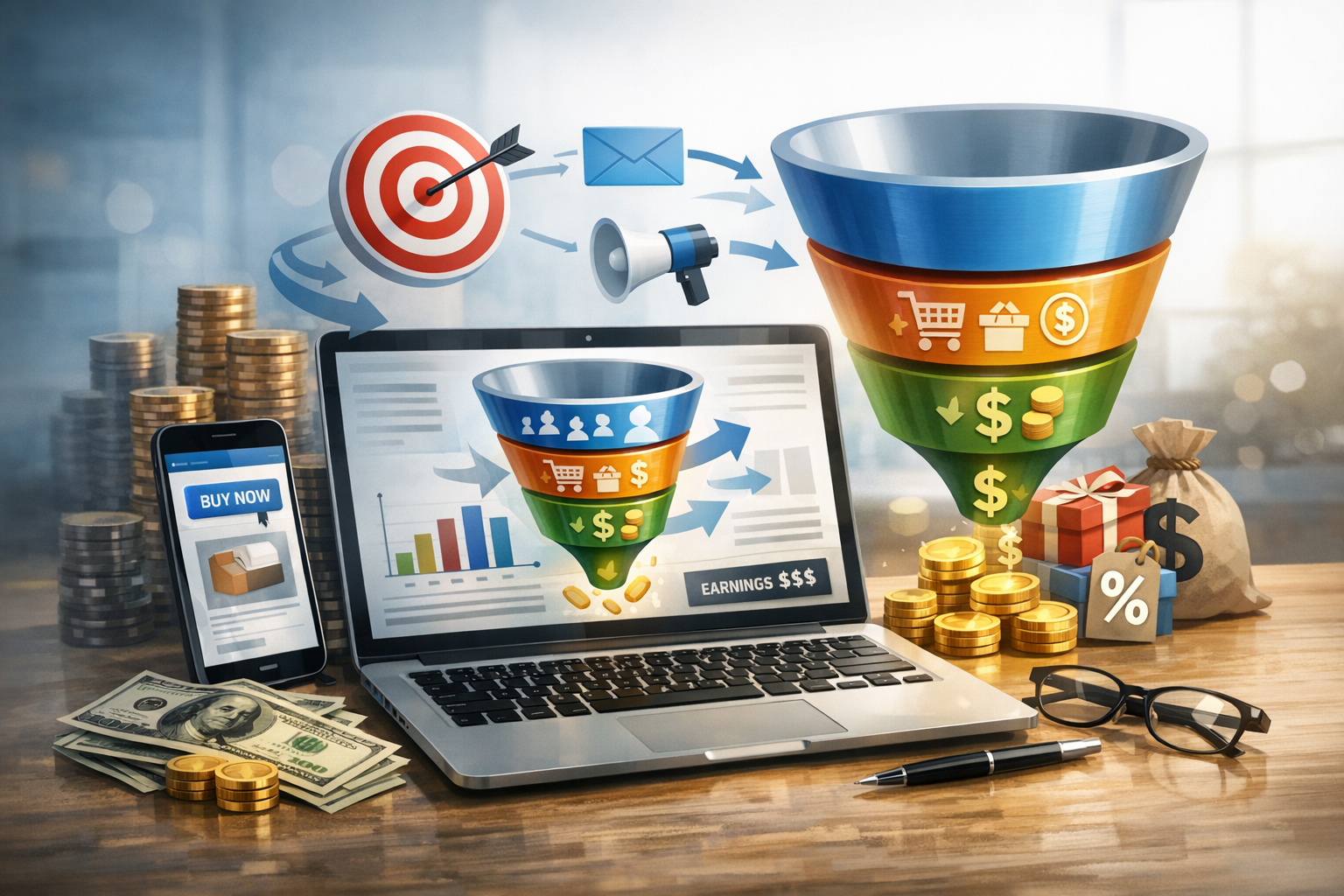
A basic affiliate funnel can be understood as a sequence of five stages. Each stage has a different purpose, and skipping one can make the entire process less effective.
1. Attract the right audience
First, you need visitors who have a genuine interest in affiliate marketing, side hustles, online business, or related topics. This traffic can come from search engine content, social media posts, videos, online communities, paid advertising, or referrals.
The best traffic is not necessarily the largest amount of traffic. It is traffic from people who understand the topic and are likely to benefit from the information you provide. For example, an article about starting affiliate marketing may attract more relevant visitors than a broad post promising quick money online.
2. Present a clear capture page
The capture page should explain what the visitor can expect and why continuing may be useful. Keep the message focused. Avoid making several unrelated promises or overwhelming people with technical details.
A strong capture page usually answers three basic questions:
- What is being offered?
- Who may find it useful?
- What should the visitor do next?
Use honest language and make sure any privacy or email expectations are clear. If visitors are asked to submit contact details, they should understand that they may receive follow-up communication.
3. Build permission-based follow-up
Many affiliate sales do not happen during the first visit. Email marketing can provide helpful reminders and education, but it must be permission-based and respectful. A simple sequence might introduce the concept, explain how the funnel works, answer beginner questions, and invite the reader to explore the offer.
Each email should have a purpose. You might share a short lesson about choosing a niche in one message, explain traffic sources in another, and then provide a relevant invitation. Avoid sending repeated messages that say little more than “buy now.” Useful follow-up builds credibility over time.
4. Connect visitors with relevant offers
The affiliate offer should match the reason someone entered your funnel. If your content discusses beginner affiliate systems, sending readers to an unrelated product can create confusion and reduce trust. Relevance is one of the most important principles in affiliate marketing.
Before promoting an offer, review its claims, terms, pricing, support, and refund policy where applicable. Do not promote something solely because it has an attractive commission structure. Your reputation is an asset, and unsuitable recommendations can harm it quickly.
5. Measure and improve
A funnel is not a set-it-and-forget-it shortcut. Review basic performance indicators such as page visits, opt-ins, email engagement, and clicks. These numbers do not guarantee sales, but they can help you identify where people may be losing interest.
For instance, many page visits with very few opt-ins may indicate that your message is unclear or that the audience is not well matched. A reasonable number of opt-ins but low email engagement may suggest that your subject lines, timing, or content need improvement.
How to Set Up Your First Funnel Step by Step
Step 1: Choose one audience and one problem
Beginners often try to market to everyone interested in making money online. That makes content and messaging too broad. Instead, choose a specific starting audience, such as employees exploring a side hustle, parents looking for flexible work, or beginners learning affiliate marketing.
Then identify a practical problem. Perhaps your audience does not know how to collect leads, struggles to organize affiliate links, or feels intimidated by technical tools. A focused problem makes it easier to create useful content and explain why an Easy Commission Funnel may be relevant.
Step 2: Create a simple content path
Plan three to five pieces of content that lead naturally toward the funnel. A blog post might explain how affiliate funnels work. A short video could demonstrate the difference between a landing page and a sales page. A social media post could answer a common beginner question.
Do not make every piece of content a sales pitch. Teach first, then present the funnel as one possible next step. This approach can attract people who value helpful information and are more likely to pay attention to your recommendation.
Step 3: Use one primary call to action
Too many calls to action can make visitors uncertain. Choose one main next step, such as reviewing the funnel, joining your email list, or reading a related guide. Supporting links can exist, but the main action should be obvious.
Your call to action should also set realistic expectations. You can invite someone to explore a system without suggesting that commissions are guaranteed. Clear expectations protect both your audience and your credibility.
Step 4: Prepare a helpful email sequence
A beginner-friendly sequence could include the following:
- Email one: Welcome the subscriber and explain what they can expect.
- Email two: Describe the basic parts of an affiliate funnel.
- Email three: Share practical traffic ideas that do not depend on exaggerated claims.
- Email four: Explain common mistakes, such as promoting too many offers at once.
- Email five: Invite the subscriber to review the Easy Commission Funnel if it matches their goals.
Give subscribers a clear way to manage their preferences or unsubscribe. Follow applicable email marketing laws and platform policies, and avoid purchasing email lists. Permission and relevance are essential for sustainable lead generation.
Traffic Ideas for a Beginner Affiliate Funnel
You do not need to use every traffic channel at the same time. Start with one or two methods that match your skills and available time.
Search-focused content
Write useful articles that answer specific questions, such as how a lead capture page works or what to include in an affiliate email sequence. Use natural keywords, clear headings, and practical examples. Search traffic may take time to develop, but helpful evergreen content can continue attracting visitors.
Short-form educational content
Short videos, social posts, and carousel content can explain one idea at a time. Instead of claiming that a funnel produces effortless income, demonstrate a basic concept or share a checklist. Educational content is easier to trust and repurpose.
Relevant communities
Online communities can be useful when you participate genuinely. Answer questions, contribute useful resources, and follow each community’s promotional rules. Dropping affiliate links into unrelated discussions can appear spammy and may result in account restrictions.
If you want to review a structured starting point before choosing your traffic strategy, you can discover Easy Commission Funnel. Use the information to decide whether the process aligns with your experience, audience, and preferred marketing methods.
Common Mistakes to Avoid
- Expecting instant results: A funnel is a marketing process, not a guarantee of income.
- Using exaggerated claims: Avoid statements about guaranteed commissions, effortless wealth, or specific earnings.
- Sending untargeted traffic: Visitors who have no interest in the topic are unlikely to become engaged leads.
- Ignoring the follow-up: A capture page alone does not build a relationship with subscribers.
- Promoting too many offers: Too much choice can make your message difficult to understand.
- Failing to disclose affiliate relationships: Be transparent when you may earn a commission from a recommendation.
- Copying generic content: Add your own explanations, examples, and experience instead of repeating promotional language.
How to Build Trust With Funnel Visitors
Trust is often more valuable than a clever headline. Explain what people are likely to encounter after they click, disclose affiliate relationships clearly, and avoid hiding important conditions. If you have not personally used every part of a system, do not imply that you have.
You can also improve trust by discussing limitations. Explain that an Easy Commission Funnel may simplify setup, but promotion, content creation, audience research, and consistency still matter. Readers appreciate realistic guidance because it helps them make informed decisions rather than encouraging unsupported expectations.
Final Thoughts on Easy Commission Funnel
An Easy Commission Funnel can give beginners a clearer framework for connecting lead generation, email marketing, content, and affiliate offers. Its value comes from organizing the customer journey, not from promising automatic or guaranteed income. The most sustainable approach is to choose a relevant audience, teach useful concepts, promote responsibly, and improve the process based on real feedback.
If you are ready to examine the process for yourself, explore the funnel and get started. Review the details carefully, consider whether it fits your goals, and begin with one audience, one message, and one consistent traffic strategy. Your results will depend on many factors, so focus on building skills and serving your audience well rather than chasing unrealistic promises.