
Starting affiliate marketing can feel overwhelming when you are faced with landing pages, email lists, traffic sources, and follow-up messages all at once. An affiliate funnel makes the process easier by organizing those moving parts into a simple path that guides a potential customer from first contact to an informed decision. For beginners, Easy Commission Funnel can provide a practical starting point for understanding how that path works without having to build every technical element from scratch.
This guide explains how to approach your first affiliate funnel, what each stage should accomplish, and how to promote it responsibly. The goal is not to promise instant income. Affiliate results vary according to your offer, audience, skills, traffic, consistency, and many other factors. Instead, the focus is on creating a useful system that can be improved over time.
What an Affiliate Funnel Does
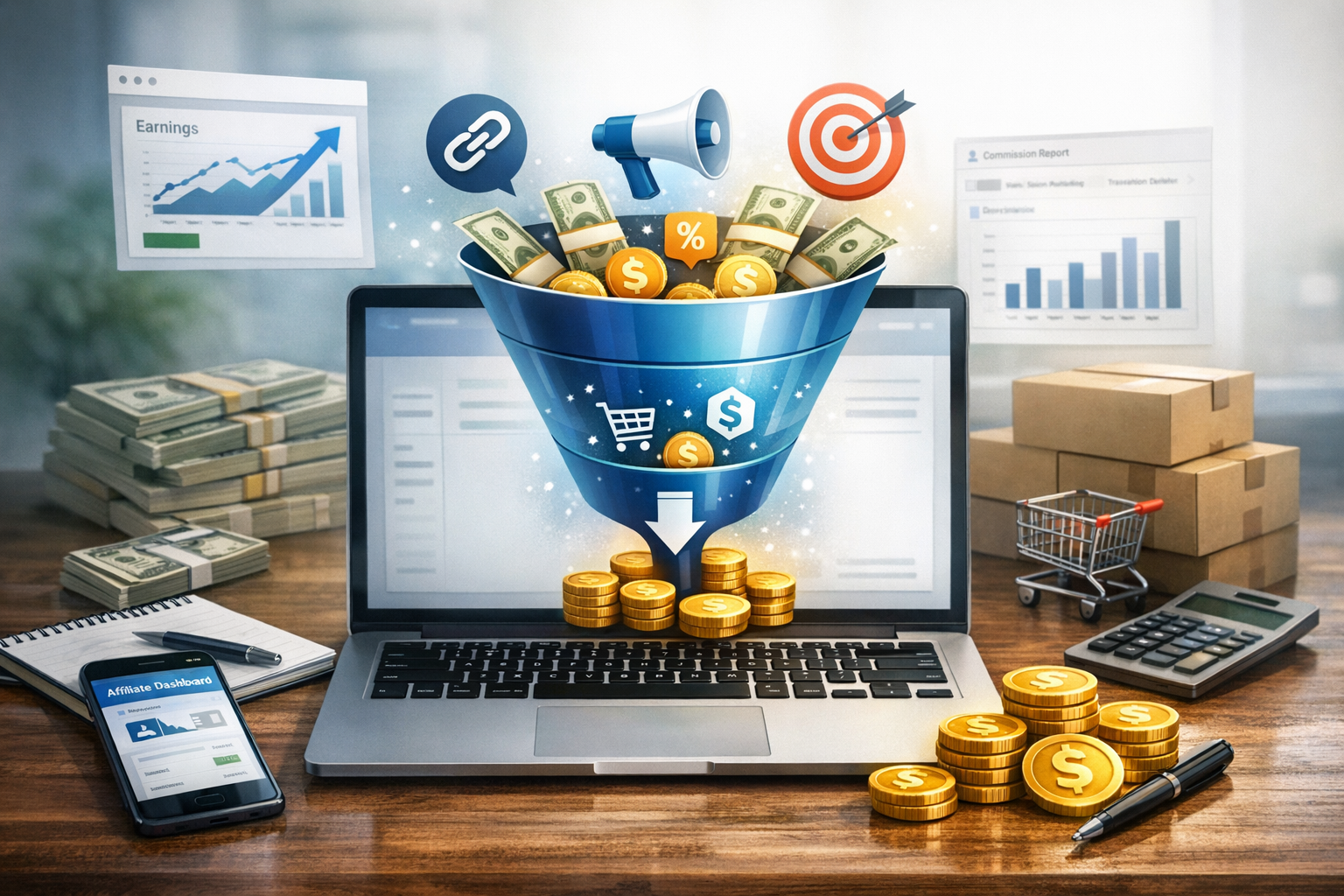
An affiliate funnel is a sequence of marketing steps designed to turn attention into action. Rather than sending every visitor directly to a sales page, the funnel gives you an opportunity to introduce a relevant solution, provide useful information, and build trust.
A basic affiliate funnel often includes:
- A traffic source: Content, social media, search, video, advertising, or another method that attracts visitors.
- A capture page: A page that explains the next step and may invite visitors to join an email list.
- A follow-up sequence: Helpful emails or content that answers questions and offers additional guidance.
- An affiliate offer: A product or service that matches the visitor’s needs.
- Measurement and improvement: Tracking clicks, sign-ups, engagement, and other useful indicators.
The funnel is not meant to pressure people into buying. Its purpose is to create a clear, relevant experience. When each step answers a genuine question, visitors can make better decisions and you can promote with greater credibility.
Why Easy Commission Funnel Can Help Beginners
Many new affiliate marketers get stuck before they begin because they believe they need to choose software, write every page, connect complicated integrations, and design a complete email campaign immediately. A guided funnel system can reduce that initial friction by giving beginners a framework to explore.
Easy Commission Funnel is positioned around a capture-page and funnel approach, allowing you to study how visitors move from an introduction to the next stage of an online business. You can learn more about Easy Commission Funnel before deciding whether its structure fits your goals, budget, and marketing experience.
That review is important. Before joining or promoting any program, examine the offer details, terms, policies, training, and support available. You should understand what you are recommending and communicate any costs or conditions clearly. A funnel can support your marketing, but it cannot replace market research, useful content, or consistent effort.
How to Build an Easy Commission Funnel Strategy
Using a funnel effectively starts with strategy rather than design. The following steps can help you create a simple affiliate marketing plan that is easier to manage and improve.
1. Choose One Audience and One Problem
A common beginner mistake is trying to promote an offer to everyone interested in making money online. Broad audiences are difficult to understand and even harder to serve with relevant content. Start with a narrower group and a clear problem.
For example, you might focus on beginners who want to learn how lead capture works, people exploring a work-from-home side hustle, or new affiliate marketers who need a straightforward starting process. Each audience may require different examples, language, and expectations.
Ask yourself:
- Who is most likely to need this solution?
- What are they trying to accomplish?
- What questions or concerns could prevent them from taking action?
- What useful information can I provide before recommending anything?
2. Define the Funnel’s Main Goal
A funnel should have one primary action. That action might be joining an email list, reviewing an educational resource, registering for a presentation, or learning about an affiliate offer. If a page asks visitors to follow five different paths, they may not know what to do next.
For a beginner-friendly Easy Commission Funnel strategy, the main goal may be to introduce visitors to the funnel and invite them to continue through the capture page. Supporting goals could include building an email audience and learning which content attracts the most relevant visitors.
Keep the first version simple. You can add more advanced features after you understand how the basic journey performs.
3. Match Your Content to the Capture Page
Your promotional content should prepare visitors for the page they reach. If a social post discusses beginner lead generation but the destination page suddenly makes an unrelated promise, the visitor may leave immediately. This mismatch can reduce trust and produce low-quality leads.
Use consistent language across your content and funnel. Explain the problem, introduce the general solution, and make the next step clear. Avoid sensational claims such as guaranteed commissions, effortless income, or instant financial freedom. Honest expectations are better for both your audience and your long-term reputation.
Creating Content That Sends the Right Visitors
A funnel only has value when it attracts people who are genuinely interested in the topic. You do not need to use every traffic channel. Choose one or two methods that fit your abilities and commit to learning them properly.
Search-Friendly Content
Blog posts can attract people who are actively looking for answers. Topics might include how affiliate funnels work, how to create a lead magnet, or how to compare email marketing tools. Focus each article on one search intent and provide a complete answer instead of forcing readers toward an offer in every paragraph.
Use the primary keyword naturally, write descriptive subheadings, and include practical examples. Search engine optimization works best when it supports genuinely helpful content rather than replacing it.
Social Media and Short-Form Education
Social platforms can help you explain funnel concepts through short posts, videos, checklists, or simple diagrams. Instead of posting only an affiliate link, teach one small idea. For example, explain why a capture page exists or show three questions to ask before promoting a product.
Invite interested people to visit a relevant resource or learn more. Follow each platform’s rules, disclose affiliate relationships where required, and avoid sending unsolicited direct messages.
Email Marketing
Email gives you a way to continue the conversation after someone leaves your website. A beginner sequence might include:
- A welcome email explaining what subscribers can expect.
- A practical lesson related to the problem they are trying to solve.
- A common mistake and a simple way to avoid it.
- An explanation of how a funnel or affiliate solution may help.
- A transparent invitation to review the recommended offer.
Every message should have a purpose. Do not send repeated promotional emails with little educational value. Make unsubscribing easy, respect consent, and use an email service that supports applicable privacy and marketing requirements.
What to Include on a Beginner-Friendly Capture Page
A capture page does not need elaborate graphics or complicated copy. It needs to answer the visitor’s basic questions quickly. Strong pages commonly include the following elements:
- A specific headline: Tell visitors what the page is about without exaggeration.
- A clear benefit: Explain what they may learn, access, or explore next.
- Brief supporting copy: Address who the resource is for and why it may be relevant.
- A visible call to action: Make the next step easy to understand.
- Trust information: Include honest disclosures, contact details, privacy information, or relevant terms.
Review the page on a mobile device. Many visitors will arrive using a phone, so slow loading, tiny text, or confusing buttons can damage the experience. Test every link and form before sending traffic.
If you are comparing options for your own online business, you can also discover Easy Commission Funnel and evaluate how its capture-page process aligns with the audience and content strategy you have chosen.
How to Follow Up Without Being Pushy
Follow-up is where many affiliate funnels either build trust or lose it. People may not act immediately because they need more information, have concerns about cost, or are still comparing alternatives. A helpful follow-up sequence gives them room to decide.
Use a conversational tone and focus on questions your audience may actually have. Explain how the process works, who may benefit, and who may not be a good fit. If you have personal experience, describe what you learned without presenting it as a guarantee for others.
It is also useful to separate education from promotion. A message about choosing a niche can stand alone. Another message can explain how a funnel supports lead generation. When you eventually mention an affiliate offer, the recommendation feels connected to the topic rather than unexpected.
Tracking and Improving Your Funnel
Do not judge your first funnel only by commissions. Early data can help you identify where visitors are losing interest. Depending on your tools, monitor:
- How many people view your content and click through.
- How many visitors complete the capture-page action.
- Whether subscribers open and engage with follow-up emails.
- Which content topics attract the most relevant audience.
- Where people stop moving through the funnel.
Make one change at a time when possible. You might test a clearer headline, a shorter form, a different content topic, or a more specific call to action. Allow enough time to gather meaningful observations, and remember that small audiences can produce limited data.
Keep a simple record of your traffic sources, content published, changes made, and results observed. This turns your affiliate funnel into a learning project instead of a collection of guesses.
Common Beginner Mistakes to Avoid
Promoting Too Many Offers
Multiple unrelated offers can confuse your audience and make your content appear unfocused. Begin with one relevant offer that you understand well.
Relying on Hype
Claims about easy money may attract attention, but they can create unrealistic expectations and undermine trust. Explain the work involved, disclose your relationship with the advertiser, and avoid income promises.
Ignoring Compliance
Affiliate marketing may involve advertising, privacy, email, and platform-specific rules. Use clear disclosures, obtain appropriate consent for email communication, and review the laws and policies that apply to your location and audience.
Quitting Before Learning
A funnel rarely becomes effective simply because it exists. Content creation, audience research, copywriting, and analysis improve through practice. Treat the first version as a foundation that you will refine.
A Simple 30-Day Starting Plan
To avoid overcomplicating your launch, use a focused schedule:
- Week 1: Choose your audience, research its main problem, review the offer, and write down your funnel goal.
- Week 2: Prepare a capture-page message, create a basic welcome sequence, and test all links and forms.
- Week 3: Publish several helpful pieces of content around one topic and invite relevant visitors to explore the funnel.
- Week 4: Review engagement, identify weak points, improve one part of the process, and plan your next content cycle.
This plan does not guarantee commissions. It simply gives you a practical way to build skills, collect observations, and establish consistent habits without trying to launch a massive online business overnight.
Final Thoughts on Easy Commission Funnel
Easy Commission Funnel can serve as a useful starting point for beginners who want to understand how capture pages, follow-up, traffic, and affiliate offers fit together. The most important work, however, remains your responsibility: choosing a relevant audience, publishing useful information, communicating honestly, and improving the experience based on evidence.
If you are ready to examine the process for yourself, explore the funnel and review the details carefully before making a decision. Start with one audience, one problem, and one clear next step. With patient testing and responsible marketing, your funnel can become a structured part of a broader affiliate marketing strategy rather than another abandoned online business idea.